
Origins
The Narwhal is a 'cetacean', scientifically known as 'Monodun Monoceras' which is characterised by the presence in the male of a long hornlike tusk. In the adult jaw of both sexes there are only two teeth, both in the upper jaw which lie horizontally side by side. The teeth of the female remain throughout life, concealed in cavities of the bone as the left tooth of the male usually does. The male's right tooth however is immensely developed and can attain a length of several feet or even yards, projecting forward from the head in the form of a tapered pointed tusk and is of a similar nature to the elephant's ivory tusk. The Narwhal is a member of the whale family and inhabits the Artic Ocean and lives in quite large schools and regrettably is still easily hunted by the whalers owing to its playful and inquisitive nature. Although it is usually dark of mottled gray in colour many have been observed as a much paler colour or even white. More reason for the name being adopted that the Narwhals had reputedly been visitors to the Irish Sea off the North Wales coast when sea temperatures were much lower.
The first reference to the Narwhal tusk in our archives is under a caricature illustration which also references the Narwhal tusk, a long-standing symbol of the Society. The caricature depicts one of the best golfers of his day and an active Narwhal, Sam B.Roberts, whose brother in law, Charles Glover, who served in the Ministry of Supply during the Second World War, presented a Narwhal Tusk to the Narwhals Golfing Society in the early 1950's. One of Sam Roberts's joiners made a wooden plinth to mount in upon as an emblem to the society.
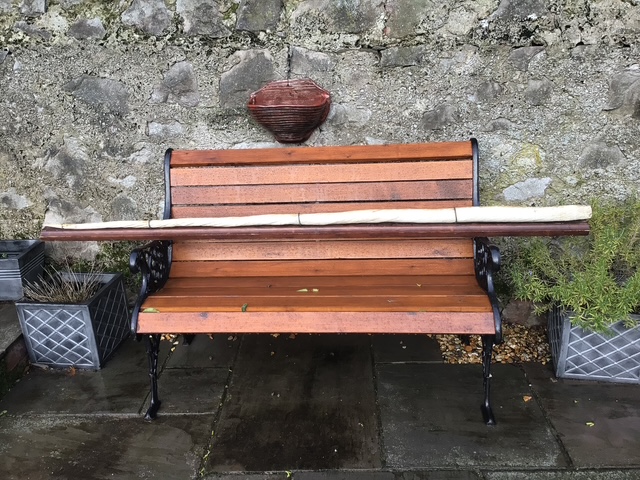
Alas, the original tusk was misplaced, but a replacement was acquired, a 6ft tusk, also mounted on a wooden plinth, but of dubious origin!
Tradition
The Tusk is placed on the first tee at our matches and is then moved up into the Dining Room for match dinners. The Narwhals tradition is to compete but always display gentlemanly behaviour, however, to encourage Narwhals to never give up, the tradition is that the two Narwhals who have been defeated by the largest aggregate margin over the 36 holes, are invited to carry the Tusk into Dinner, slow hand clapped by the assembled teams and displaying the burden of defeat to all. Such indignity has been debated over the years, but we still maintain the tradition and Match Managers have had to cajole certain Narwhals who cannot face the task after such indifferent performances during the day's foursomes matchplay.
Tales of the Tusk
The Narwhal Tusk is well travelled and has been lost and forgotten on a few occasions.
One such tale was the loss of the Tusk in a match against The Hittites at Royal Liverpool, when after a wonderful matchday and equally enjoyable dinner, the Narwhals Captain returned to the clubhouse the following morning to collect the Tusk, but it was nowhere to be found. A major search followed, assisted by the House Manager, but still no Tusk in sight, until finally it was discovered in the Snooker Room. The early morning cleaners had moved it from the Dining Room to the Snooker Room whilst clearing up and placed it upright, mistakenly thinking it was some sort of unique snooker cue......!
Tusk Travels
Whilst travelling with golf clubs has its challenges, there is no better sight of a fully laden Narwhals vehicle, travelling with a 6ft Narwhals Tusk onboard. Such joys are shared around the Narwhals Golf Society and prior to match days there are normally a few phone calls around by the Match Manager enquiring where the Tusk has been residing since the last match and what the plans to deliver it to our next encounter are.
The Legend lives on....!